
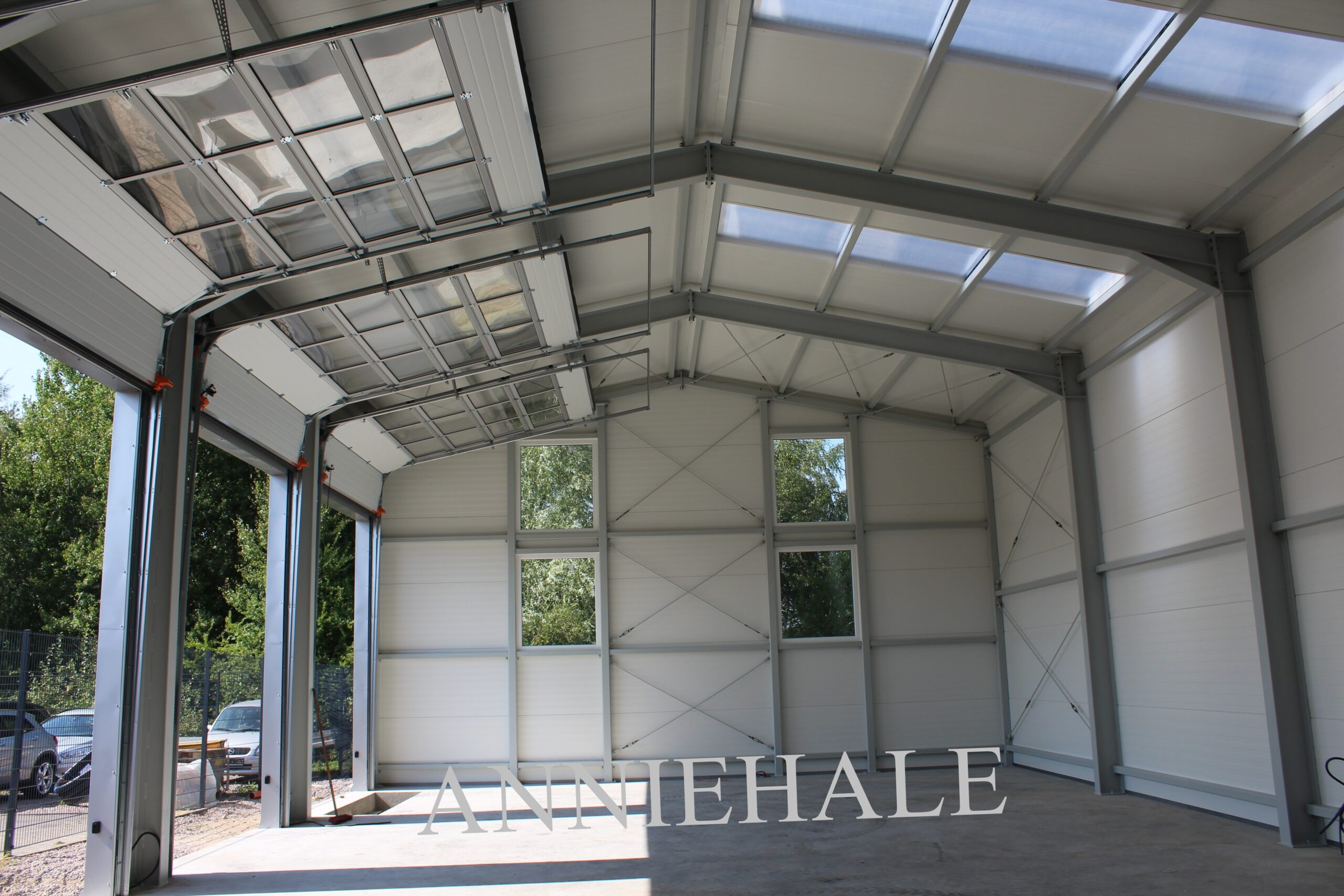
Nowadays, when planning the construction of large industrial, warehouse or sports facilities, we are increasingly faced with a choice: steel or traditional halls? Both solutions have their advantages and disadvantages, so it is worth analyzing them carefully to make the best decision. In this article, we will look at both options, and we will focus in particular on the advantages of steel halls, which are gaining popularity.
Steel halls – advantages and disadvantages.
Advantages:
- Speed of execution – steel halls can be built much faster than traditional ones. Prefabricated structures are manufactured in factories, and assembly on site usually takes from several weeks to several months.
- Design flexibility – steel allows for the creation of large, open spaces without the need for many internal supports. It is an ideal solution for warehouses, production halls or stadiums.
- Lightness of construction – steel is a lightweight material, which allows for smaller foundations and reduced foundation costs.
- Durability and resistance – properly protected, steel is resistant to corrosion, weather conditions and mechanical damage.
- Possibility of expansion and modification – steel halls can be easily expanded or modified in the future, which is a big advantage in a dynamically changing business environment.
Defects:
- Requires appropriate thermal and acoustic insulation to ensure comfort of use.
- The need for anti-corrosion protection, which involves additional costs.
- In some cases, especially in smaller buildings, it may be perceived as less aesthetically pleasing compared to traditional solutions.
 English
  Polish
  German